Case study · NO. 01
Panini, meet FUT.
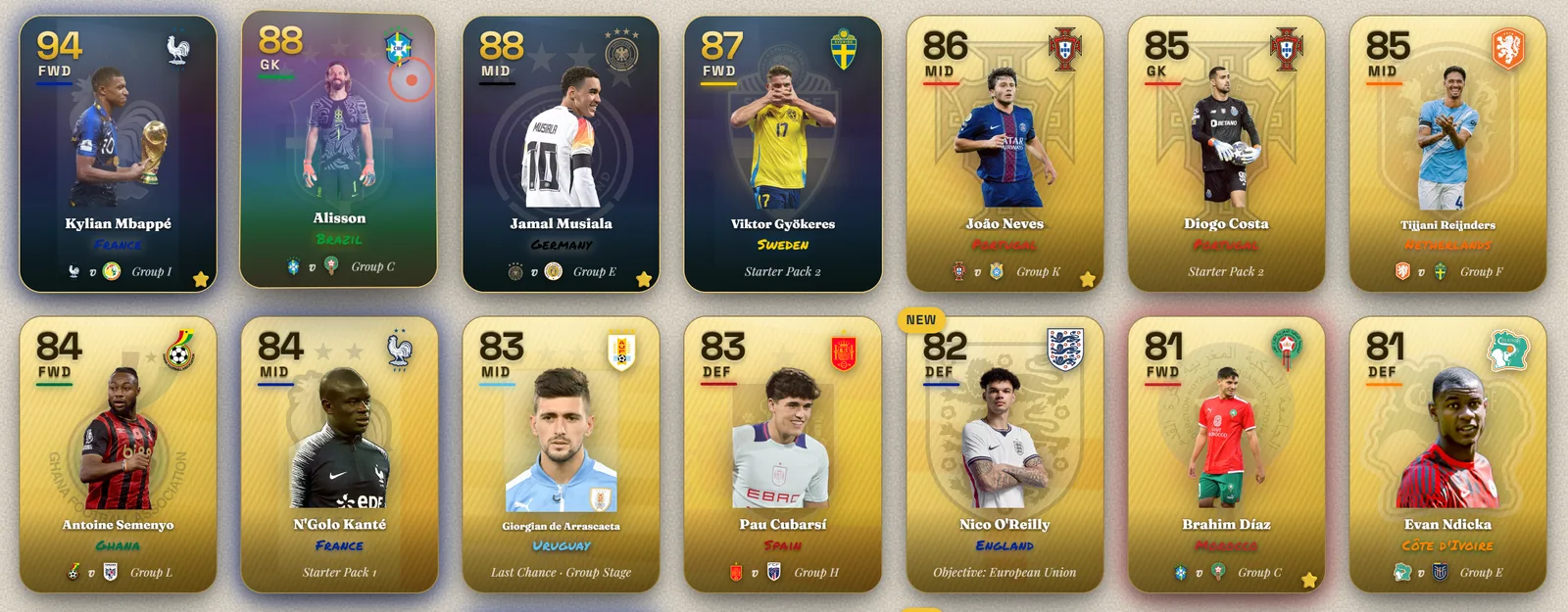
A sticker album where the packs open themselves — the moment a real World Cup match goes full-time — and the stickers reflect what actually happened on the pitch.
- Started
- Spring 2026
- Status
- Available to play
- Data
- ESPN feed, near-live
- Team
- One human, many agents
The hook
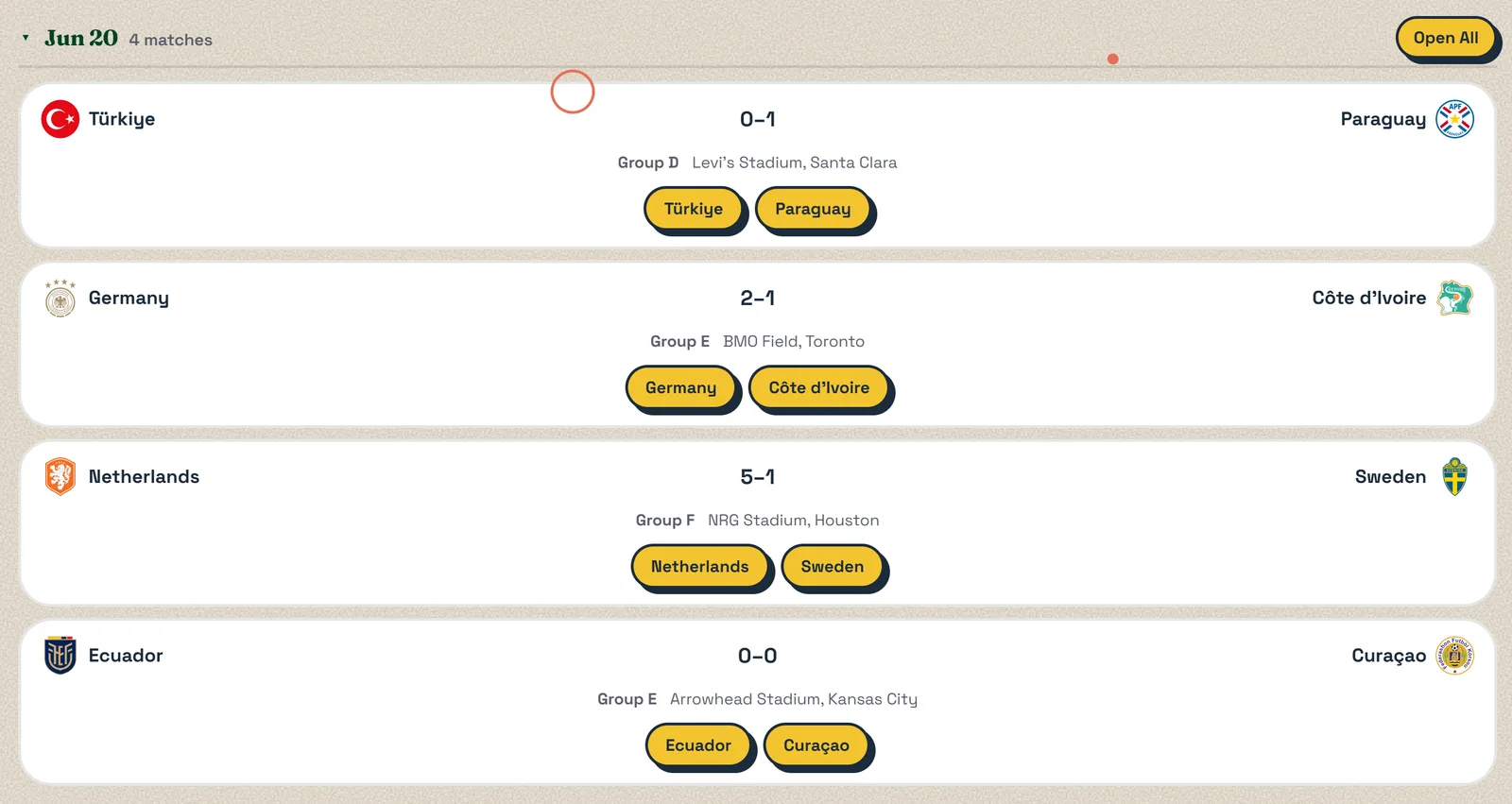
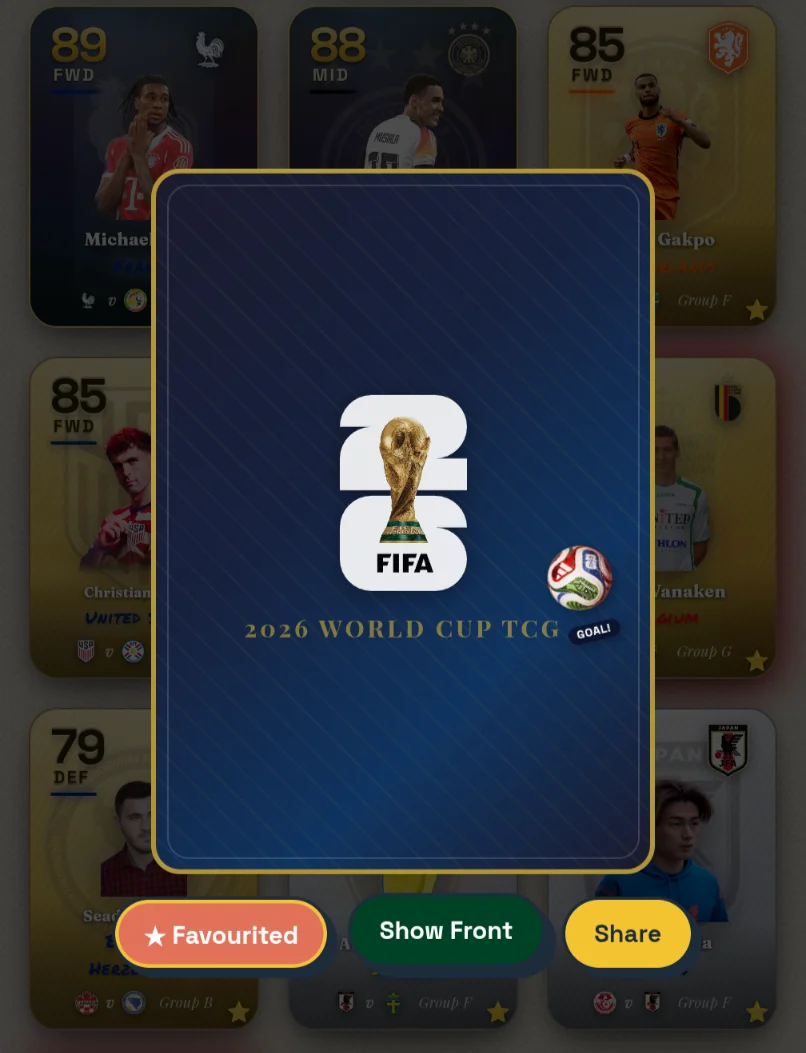
I grew up on Panini albums and FUT squads, and the two never met: Panini has the romance of a collection that fills in as the tournament happens, FUT has the game. This glues them together. Packs unlock the moment a real match goes full-time; pull a striker who scored that night and his card arrives with a goal sticker on the back — a red card earns the shameful red rectangle. By the final, your binder is a record of the tournament that actually happened.
The hard part
The live pipeline took longer than any feature you can see. No official free feed carries goalscorers, so the game leans on ESPN’s, with a scores-only backup, a shared cache, and fuzzy name matching that lands “L. Messi” on the right card and never on the wrong brother. The other hard part was human — getting someone to open it once. After that they’re in: my friends looked one time to be polite and found themselves back every day for the streak pack, the objectives, the arena.
A one-person studio
By any sane measure this is too much game for a side project: a pack economy, daily rewards, a scout market, and a PvP arena whose matches are simulated deterministically — the server and browser can replay the same match from the same seed, making results reproducible. I built all of it alone, on nights and weekends around my day job at The New York Times, and the honest answer to how is AI. I build with coding agents — Claude Code, mostly — the way an editor works with a fast writer: I decide what the game should feel like, the agent drafts, and I playtest, cut, and redirect. The group chat is the QA department. It’s still not finished. It’s not supposed to be.